

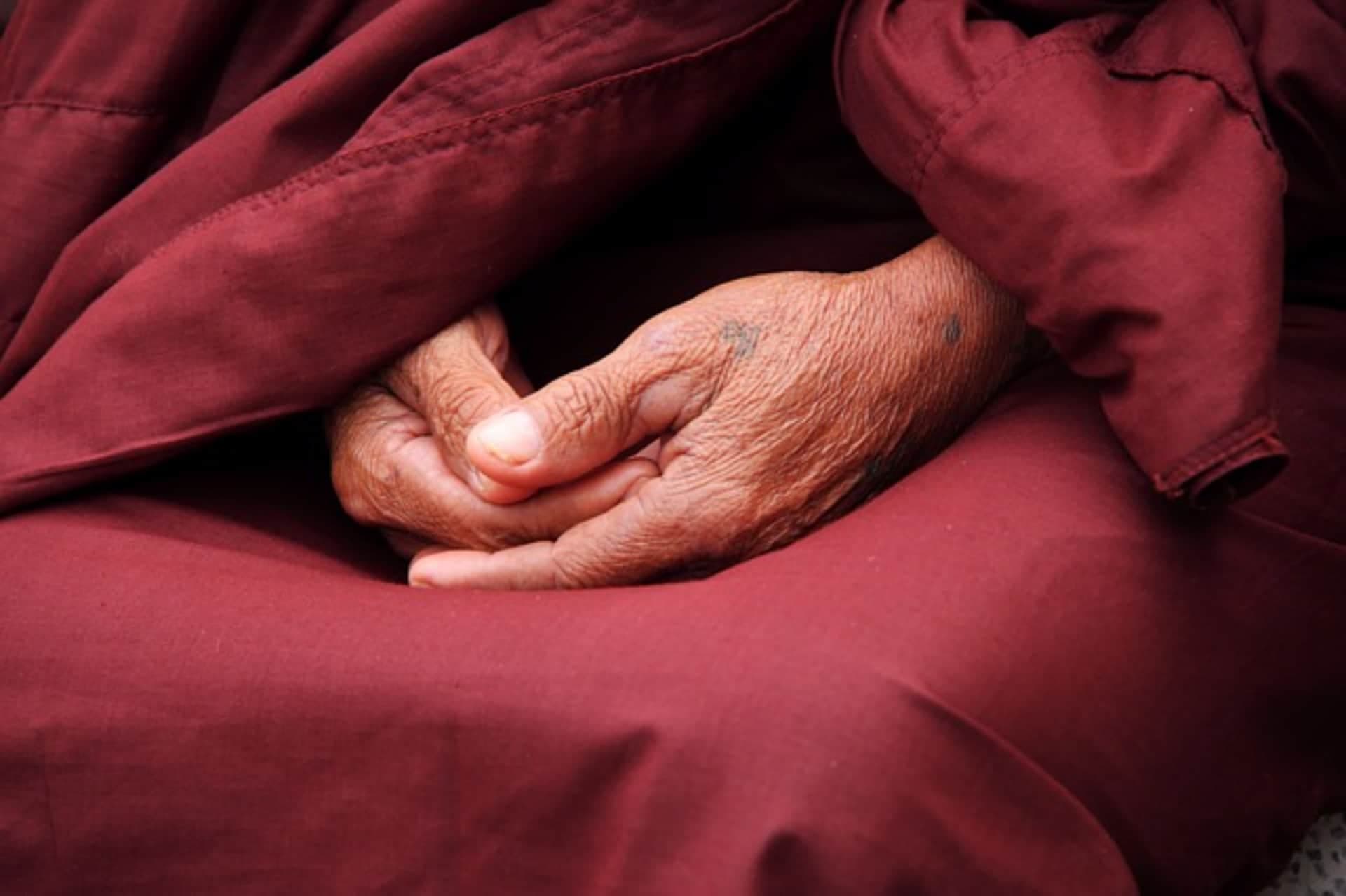
Mindfulness — known in Chinese as both zhèngniàn and jìngguān — has taken off in society in recent years, with all manner of courses and activities springing up like mushrooms after rain. What is more, the material taught in zhèngniàn and jìngguān classes is so alike that the two terms really are easy to confuse. So is zhèngniàn simply jìngguān? Let us walk you through it.
The reason zhèngniàn is so easily confused with jìngguān is that zhèngniàn carries two distinct meanings. It can be equivalent to jìngguān, and it can also be something other than jìngguān. It all depends on which zhèngniàn you happen to be talking about.
The first kind of zhèngniàn: the same as jìngguān in the field of psychology — only a regional difference in translation
The first kind of zhèngniàn is simply jìngguān, or mindfulness in English. In the 1970s, inspired by Buddhist philosophy and contemplative practices, Jon Kabat-Zinn and others gradually wove these methods into the realm of scientific research and psychological therapy. This kind of mindfulness was born of a gradual process — rigorous research carried out by countless psychologists, theory refined step by step through logic and reason — and it is the mindfulness you most often hear about in everyday society today. Mindfulness has become popular because a large body of scientific research supports the idea that practising it can strengthen psychological qualities such as concentration, emotion management and empathy. Its effects are marked in treating depression and in boosting employee productivity in corporate training.
So why does it go by two names? This appears to be a matter of regional preference. The translation customarily used in Hong Kong is jìngguān, while other Chinese-speaking regions tend to use zhèngniàn — but the two refer to exactly the same thing. Take, for example, this book, Mindfulness: An Eight-Week Plan for Finding Peace in a Frantic World (a Taiwanese edition titled with the word zhèngniàn): it is a mindfulness title published in Taiwan, written by an author with a background in psychology, and what it describes is plainly not Buddhist mindfulness. Yet because of regional word choice, the Taiwanese publisher used the term zhèngniàn — had it been published in Hong Kong, it would very likely have become jìngguān instead.
And what TreeholeHK promotes is also this kind of mindfulness. As for what it actually involves, you can refer to our article 【What is jìngguān? The mental training favoured by Google and Goldman Sachs】, so we will not repeat it here.
The second kind of zhèngniàn: a method of cultivating the mind in Buddhism
If the person or organisation using the term zhèngniàn has a Buddhist background, then what they mean is very likely that other kind of mindfulness (an example). This kind of mindfulness is rendered in English as Right Mindfulness, and it is one part of Buddhist contemplative practice. The term zhèngniàn originates from the Noble Eightfold Path in Buddhism, which refers to eight kinds of practice undertaken to attain nirvana — the state of transcending all worldly suffering. These are right view, right thought, right speech, right action, right livelihood, right effort, right mindfulness and right concentration. Right mindfulness is one of them, and the way it is applied in Buddhism differs from the focus taken by the field of psychology: it is not a standalone method of cultivating the mind, but must be paired with the other seven paths in order to attain enlightenment. Although the mindfulness of modern psychology was inspired by the mindfulness of Buddhism, their aims differ, and so their practices diverge considerably as well.
So what does mindfulness in Buddhism actually involve? To try to answer this question I did some research online and spoke with a number of people, but I am by no means a Buddhist scholar, so I will simply share this as a personal opinion, for your reference. Among the explanations I found more reliable, and which I also came across often, is the one that interprets it through the Four Foundations of Mindfulness 【the Four Foundations of Mindfulness】 — that is, through training that progresses in sequence, learning to place one's concentration upon four things: the body (bodily sensations), feeling (emotional sensations), the mind (thoughts and ideas) and dhamma (the nature of phenomena themselves), and through this to attain the goal of cultivating the mind. Because what TreeholeHK promotes is the non-religious version of mindfulness, if you wish to learn mindfulness in the traditional Buddhist sense, it is best to seek out an organisation with a Buddhist background. In Hong Kong, for example, there are organisations such as Tsz Shan Monastery that are dedicated to promoting it.




Comments2 comments