Living in the Moment Isn't What You Think
Living in the moment isn't about seizing pleasure while you can. It's a way of being that lets us savour the present fully — calm, focused, and free of worry — whatever life throws our way.
Living in the moment isn't about seizing pleasure while you can. It's a way of being that lets us savour the present fully — calm, focused, and free of worry — whatever life throws our way.
We often take living in the moment to mean carpe diem — seizing the day, eating and drinking while we may. But truly living in the moment is more than chasing the pleasures of the instant. It is a way of being that frees us from the grip of worry, so that we can wholeheartedly enjoy the life we are living right now — in good times and bad alike. What it values is not outward, material enjoyment, but inner calm and focus.
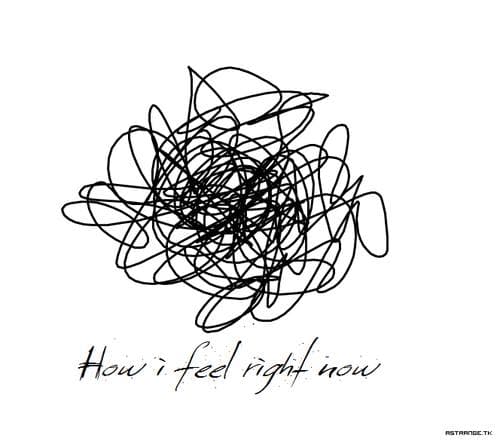
What are you thinking? In daily life, our minds fill up, quite naturally, with thoughts about the past and the future. We fret over whether the project we wrapped up earlier will win others' approval; we feel regret and frustration over things that have already happened; we worry about whether we will ever afford a flat or be able to emigrate, anxious about a future full of uncertainty. Modern life is crowded with cares — work, family, health, society — and even while we are enjoying a good meal or out exploring the hills and waters, we sometimes cannot stop these thoughts from welling up. In psychology, this kind of uncontrollable thinking is called rumination (Rumination), and unhealthy rumination is closely linked to mental-health problems such as anxiety and depression. Modern life gets so entangled in these cares that we cannot truly taste the flavour of the present.
Living in the moment asks us to step back from these worries, to place our full attention on everything in the here and now, and to free ourselves as far as possible from the tangle of stray thoughts. What we focus on can be the activity we are engaged in, the world around us, or our own inner self.
The first benefit of living in the moment is that we can genuinely enjoy the feelings the present brings. Our experience is shaped by our thoughts and our state of mind. Living in the moment lets us feel an activity — even life itself — in fine detail, and easing our attachment to the past or our worry about the future can release us from the bind of those emotions, so that we experience life differently.
You may feel that regret over the past and worry about the future serve a purpose — that they remind you not to repeat your mistakes, or help you prepare and improve your performance. A teacher of mine once said that planning and weighing up the future appropriately is problem-solving (Problem-solving), but worrying too much instead becomes a burden that affects how we perform. Living in the moment, as a way of being, does not mean turning a blind eye to the past or the future. The past lets us learn from experience; the future lets us find hope and prepare. Living in the moment does not ask anyone to abandon thoughts of the past or hopes for the future. Rather, it hopes we can bring our minds back to the present, so that when negative thoughts surface, we can step back from them a little, tell apart the actual situation here and now from our own imaginings, and no longer be controlled by those thoughts.
For city dwellers, living in the moment is not an easy thing; we need to recognise the techniques involved and then practise them.
We can train our powers of observation and strengthen our ability to feel the present. Living in the moment is about attending to the details of the instant, yet in life we often overlook those details for the sake of efficiency. Even the smallest details can make our experience more complete and help us immerse ourselves more fully in it. To cultivate observation, on the one hand we can learn to feel the changes in our own body, taking ourselves as the object of observation and turning our attention to bodily sensations we usually ignore; on the other hand, we can take an external object as the focus of observation — for example, by carrying out a mindfulness eating exercise, uncovering details we had never noticed in objects we take for granted. Readers keen to try mindfulness can browse TreeholeHK's "Mindful Observation of the Breath" and "Mindful Living — Eating" audio tracks, putting mindfulness into practice to cultivate observation.
We can also train our ability to manage our emotions, lessening the effect of negative thoughts and rumination on us. Simply suppressing negative emotions does not work; practising mindfulness teaches us how to meet these thoughts with an open, accepting attitude. The arrival of a thought is nothing to fear. What is to be feared is that, once we are swept up in negative emotion, we struggle to pull ourselves out and cannot stay focused on the present. TreeholeHK's "Emotional Exploration" audio track is designed specifically for learning to sit with difficulty. Through repeated practice, we will surely come to take charge of our own minds, no longer caught up in the past and the future.
Yesterday is history. Tomorrow is a mystery. Today is a gift. That's why they call it the Present. This line comes from Kung Fu Panda. Plainly and simply, it captures how precious the present is. Rather than sinking into idle thoughts about the past or the future, it is better to bring our minds to the present — to truly feel ourselves, to feel the people and things around us, to let go of what binds us, and to genuinely live in the moment.


Comments
No comments yet — share your thoughts.