


「So what are we, exactly?」
This is the question many people turn over again and again inside a relationship that has no name. You chat all the time, you meet up, you might even be physically close; you feel close to each other, and yet you can't quite bring yourself to say, "We're a couple." In recent years, psychology has given this uncertain emotional state a name—situationship (Gupta, 2024; Langlais et al., 2024; Vilhauer, 2024).
This article is an invitation to quietly work through it with you: what exactly is a situationship? Why do we end up in relationships like this? What does it do to our wellbeing? And how can we tend, gently, to our own emotional needs?
What Is a Situationship? The 6 Signs to Recognise It
A situationship is more than just vagueness. It is an emotional connection that sits somewhere between friendship and romance, with no clear definition (Gupta, 2024). There is intimacy and companionship, but it lacks stability and commitment. Here are the situations that commonly mark it out:
1) The relationship has never properly been talked through: Neither of you has clearly discussed where you stand, and neither has given the relationship a name.
2) Closeness comes and goes: One moment you feel close, the next distant; the other person blows hot and cold, and it leaves you uneasy.
3) There is no shared picture of the future: Even with a connection between you, you rarely talk about how far you might go together.
4) The emotional exchange stays on the surface: You talk about everything and nothing, yet it feels as though you can never truly reach what is inside the other person.
5) Meeting up is driven mostly by convenience: More often than not you see each other on a whim, when it happens to be easy—rarely just for the sake of "really seeing you."
6) No commitment, and no conversation about exclusivity: You might both be seeing other people, but no one has said clearly whether that is okay.
Research notes that the intimate interactions within a situationship—things like hugging, kissing, even sexual activity—closely resemble those of a stable, committed relationship, yet on the dimension of "commitment" they are clearly missing (Langlais et al., 2024).
Why Do We Walk Into a Situationship?
A lot of the time, we walk into a blurry relationship not because we lack courage, but because we carry an inner contradiction—a longing to draw close, paired with a fear of getting too close.
Psychologists point out that many people in a situationship actually long for intimacy and connection, yet don't dare—or don't wish—to take on the risk and responsibility that come with "loving someone" (Gupta, 2024).
Sometimes we also hold on to the hope that "maybe they'll change, maybe the relationship will become clearer," and so we quietly stay, waiting for the other person to give us an answer. But waiting like this can slowly lead us to overlook how we really feel and what we really need.
How a Situationship Affects Wellbeing: The Quiet Strain We Never Voice
A relationship that looks easy and free on the surface may in fact be holding a great deal of unspoken unease.
Researchers note that when a relationship lacks clear commitment yet still pulls at our emotions and our bodies, it can have negative effects (Vilhauer, 2024):
1) Rising anxiety and uncertainty: You may find yourself guessing at the other person's intentions over and over, worrying whether you are "too clingy" or "not good enough."
2) More self-doubt and inner criticism: When the other person keeps holding back, you may catch yourself thinking, "Maybe I'm not worth loving."
3) The more you invest, the more you lose: When you care more and more yet never get a clear response, that gap can leave you feeling all the more drained.
People who go through this kind of relationship again and again have often been hurt in past relationships, or carry an unstable pattern of attachment (Langlais et al., 2024).
Stay or Let Go? 4 Suggestions for Gaining Clarity
1) Pause and listen to how you really feel
Ask yourself: Have I simply grown used to the company this relationship gives? Do I long for a clearer, more stable connection?
2) Try to express your needs honestly
Even if it is hard to speak up, voicing what you hope for can help you see more clearly what you want—and let the other person know where your line is.
3) Setting boundaries is a way of protecting yourself
When you stop forcing yourself to accept an unequal relationship, you make space to meet a connection that fits you better.
4) Remember, you deserve a love that holds you whole
If this relationship leaves you forever doubting yourself, or afraid to express what you truly think, perhaps it is time to slowly loosen your grip and return to your own centre.
In Closing: Even Within a Blurry Love, We Can Still Choose Peace
Not every relationship needs a clear definition right away. But when, inside a relationship, you feel less and less happy and more and more uneasy, that is a signal—a reminder to look back and notice what you truly long for.
You can gently voice your needs, and you can bravely walk away from a blurry relationship. Because love should not be only guessing and waiting; it should be something that helps you know yourself better and better, and draw closer and closer to a place of peace and freedom.
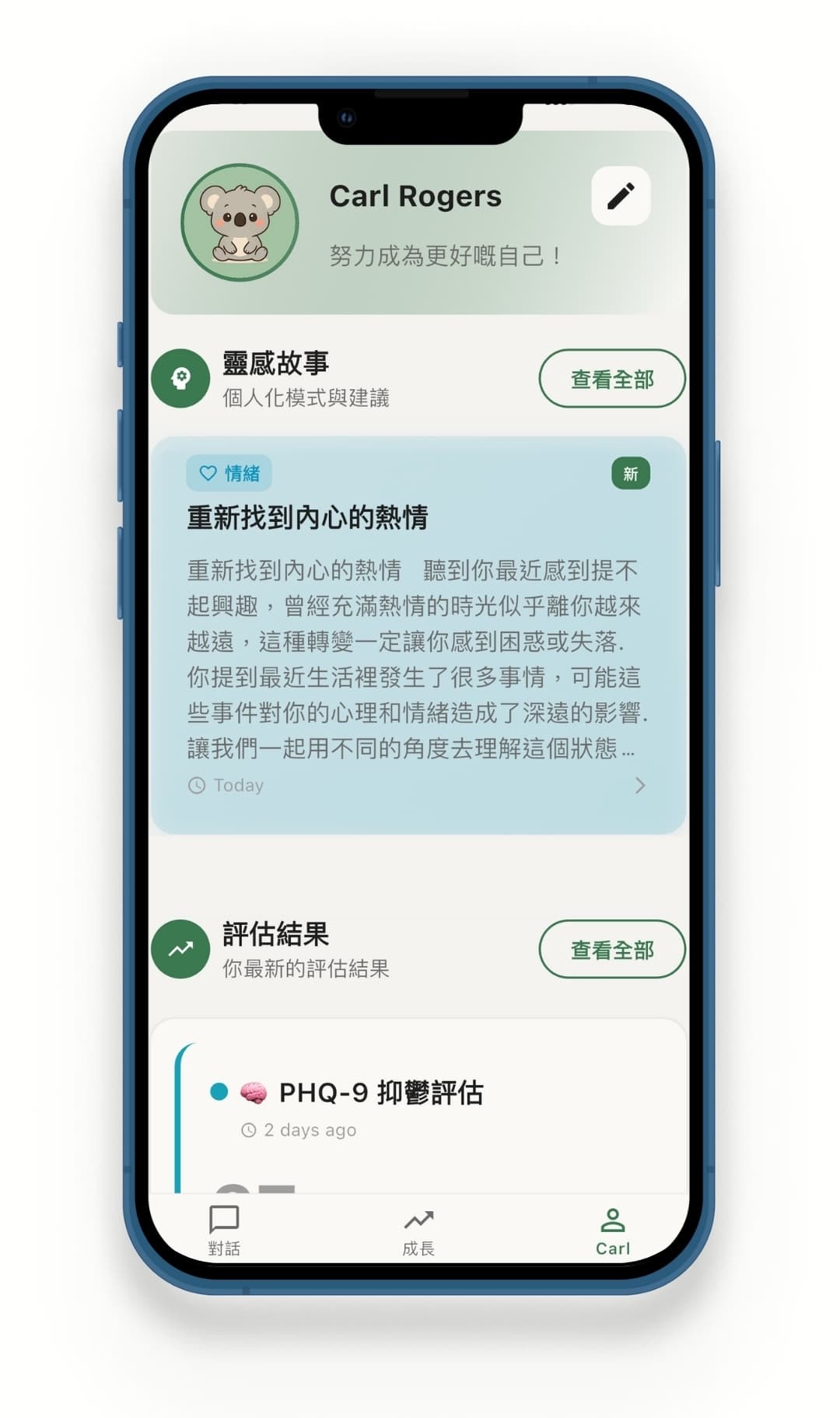
Explore the MindForest App: Reconnecting With Yourself Amid an Uncertain Relationship
When you find yourself in a hazy, unclear relationship—unsure of the other person's intentions, and unsure of your own place in it—your mind is often full of tension and questions. At times like these, MindForest can become an important companion as you explore your inner world and gain clarity on what matters to you.

? ForestMind AI Coaching: A Gentle Companion and Guide
ForestMind offers tailored psychological support, helping you practise noticing how you feel, making room for haze and unease, and finding your way back to your own direction and values.

? Insight Journal: A Space for Quiet Conversation
When a relationship leaves you confused, writing down your moods and observations is a gentle way of responding to yourself. Through the Insight Journal, you can see your own real needs more clearly, rather than constantly bending to other people's expectations.

? Psychological Assessment: Seeing the Self Behind the Relationship
Do you always fall into a similar relationship pattern? Through scientifically designed psychological assessments, you can come to understand your own habits and longings in relationships more deeply, and build healthier, clearer boundaries and choices for yourself.

Download MindForest, so that you don't just walk through a relationship—you draw closer to your true self at every step.
References
Vilhauer, J. (2024, March 26). Why situationships rarely evolve into relationships. Psychology Today. https://www.psychologytoday.com/ca/blog/living-forward/202401/why-situationships-rarely-evolve-into-relationships
Gupta, S. (2024, April 25). Situationship: How to cope when commitment is unclear: Are they the one, or just the one for right now? Verywell Mind. https://www.verywellmind.com/what-is-a-situationship-5216144
Langlais, M. R., Podberesky, A., Toohey, L., & Lee, C. T. (2024). Defining and describing situationships: An exploratory investigation. Sexuality & Culture, 28(4), 1831–1857. https://doi.org/10.1007/s12119-024-10128-z






Comments
No comments yet — share your thoughts.