Good Marketing Is Really Empathy
Looking back on TreeholeHK's first year, our founder shares the marketing lessons that helped a social enterprise find its footing. Running a social enterprise takes both heart and head — and good ma…



Want to bring psychology into your team?
Looking back on TreeholeHK's first year, our founder shares the marketing lessons that helped a social enterprise find its footing. Running a social enterprise takes both heart and head — and good ma…
Keep reading
Discover more
Almost without our noticing it, TreeholeHK has now been up and running for nearly a year — from those early days of anxiety and dread, of wondering whether we could keep our nerve and carry on, to a business that, on the whole, is finally finding its stride. Looking back, I am genuinely grateful to everyone we have met along the way. A social enterprise is different from an ordinary startup: the aim of the business is not simply profit maximisation (Profit Maximisation), but to give back to society as well.
To run a social enterprise, you cannot do without either "heart" or "head". The heart is the burning commitment to a vision for society, the resolve to press on against the odds; the head is the cool-headed reading of the situation, adapting as circumstances demand. On the "head" side of things, when I look back over TreeholeHK's development, one of the important factors behind whatever success we have had has been careful, considered marketing.
For friends who are set on launching a social enterprise of their own, here is some of what we have learned:
At the very beginning, the banner across the top of TreeholeHK's homepage looked like this:

All this copy was busy explaining what mindfulness is. Friends who already had some grasp of mindfulness might well read on — but it probably lost the wider public, who had never heard of it. In truth, it made a mistake that many social-enterprise newcomers make: becoming so wrapped up in your own world that you only explain what you are doing, instead of getting your Marketing right by starting from your target audience.
What people care about most is themselves — only they truly care about what they are doing. Your target audience is no different: how can your product affect them? What, specifically, can it help them achieve?
Attention online is extremely precious. The moment we find a website uninteresting, we leave at once. Attention can never be taken for granted.
So when you write copy for a website, always start from the user's point of view. Spark their interest first, and only then, gradually, explain what the company does.
With that one change, things felt far more satisfying. Begin from the potential and the success that everyone cares about, and only then introduce mindfulness as the method:

A few websites do this so well they deserve to be called textbook examples. One is Wave, the accounting software aimed at startups; another is Khan Academy, which promotes universal access to education. Rather than say too much, here are a few screenshots for everyone to admire:




Another common problem for social-enterprise newcomers is being unfamiliar with — or disdainful of — the many commercial tools available online. They assume that as long as you make a good product, with a cause worth supporting, customers will come knocking of their own accord.
It is worth asking yourself, hand on heart: when was the last time you actively went looking for a social enterprise worth supporting? If you cannot remember, then on what grounds do you assume your own social enterprise is worth others seeking out?
So using commercial tools to help you realise your vision is enormously important. Every industry has its own distinctive ecosystem, and no single commercial tool is a cure-all. Roughly speaking, there are two marketing modes: creating demand (Create Demands) and meeting demand (Meet Demands). To take an example: when you see a short-video ad pop up on Facebook, are drawn in by it, and give it your custom, that is a business creating demand. The same mode applied to the funeral industry simply will not work, because no matter how compelling the short video, you would never wish to try out funeral services — so the funeral industry can only meet demand.
TreeholeHK's main mode of online marketing is search engine optimisation (Search Engine Optimisation; SEO). In simple terms, SEO is about getting your own product to appear on Google's search results pages, and the higher the ranking, the better. For a demand-meeting marketing mode, SEO is generally a good fit. There is already a demand to learn mindfulness in the market, so as long as the public search for "mindfulness" and TreeholeHK's page shows up in the search results (and, as luck would have it, we hold the top spot), we can draw in this group of customers.
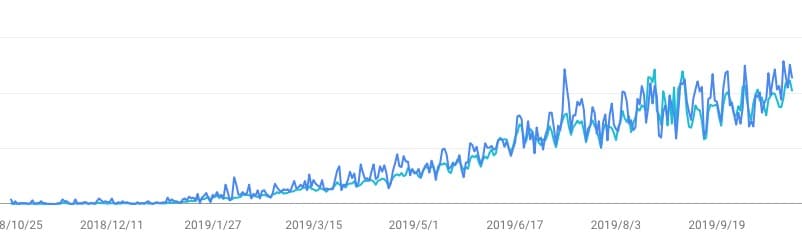
So how do you do SEO well? One key point is keyword research (Keywords Research). Keyword research means making good use of keywords that match the dynamics of the market in your article's headline and body. Take, as an example, an article written for managers about managing the new generation. You could use one of these headlines:
1. Management Tips for the New Generation – Helping Your Post-90s Colleagues Reach Their Potential
2. Getting Along Smoothly with Young Colleagues – Helping Newcomers to the Workplace Reach Their Potential
From an SEO point of view, headline 1 is the clear winner. Whether or not a headline grabs the reader, let us set aside for now. But you can imagine: this article is written for managers, and when one runs into the difficulties of managing the new generation, they will search for terms such as "new generation", "management tips", "post-90s" — very few people will search for "young colleagues" or "getting along smoothly". So the basic step of SEO is to think in reverse: think about what the reader needs, and tailor your wording to match. And this requires empathy.
SEO is a vast and deep field of study, and this is only a drop in the ocean. I am no online-marketing expert — I am merely following the lead of the experts out there, occasionally trying something new of my own.
In fact, there are plenty of resources online for learning SEO. I myself often turn to Ringo's SEO blog to learn. What makes Ringo's blog especially good is that he doesn't just talk about the technical side — he also talks about the customer's frame of mind. For friends who are keen to make use of SEO, I wholeheartedly recommend it.
When it comes to Marketing, most people are thinking about how to fine-tune their ad settings, so their budget isn't burned on irrelevant likes from far-flung click farms. Dialling in the right targeting parameters may help you edge ahead a little, but the foundation of Marketing is still empathy (Empathy).
In the traditional business model, the roles of enterprise and customer are opposed: the enterprise is always looking to extract maximum profit from the customer. But as social enterprise has developed, the business model has gradually been changing. The business model of the new era is one in which enterprise and customer are an alliance, working together to create an ideal vision. This is where the broad trend is heading, and to the customer, this kind of enterprise is undoubtedly the more appealing.
As the business model is renewed, marketing strategy must change with it. Marketing is no longer about pouring information at people; instead, it is about finding ways to strike a chord.
This requires a thorough understanding of the customer's psychology. A successful marketer needs, at the same time, to be an outstanding psychologist.
"Good wine needs no bush" — assuming your vision is somehow especially lofty, and that others have a duty to understand it, is the biggest trap in a social enterprise's thinking. Because a company's success or failure has no necessary connection to whether the company is contributing to the world: plenty of companies that do the world far more harm than good are flying high.
So if you want to contribute to society, you need a clear marketing plan all the more — do not rely on Hope Marketing: put yourself in the customer's shoes, and describe your product or service concisely and clearly.

Workplace
Workplace
Personal Growth






Comments
No comments yet — share your thoughts.