What I Saw Inside a Mainland Factory
As a psychology graduate, I spent the early pandemic working as a Management Trainee at a factory in Dongguan — a front-row seat to mainland China's corporate governance and HR culture. Here is what …

Want to bring psychology into your team?
As a psychology graduate, I spent the early pandemic working as a Management Trainee at a factory in Dongguan — a front-row seat to mainland China's corporate governance and HR culture. Here is what …
Keep reading
Discover more

Workplace
Workplace
Personal Growth
In recent years, the SAR government, the pro-establishment camp and pro-Beijing media have all argued that Hong Kong's young people are resisting China — levelling accusations that, time and again, come back to claims that they lack an international outlook, are short-sighted, "arrogant little frogs in a well", and unwilling to accept "the fact that the mainland has overtaken Hong Kong" — and they have pushed hard to encourage Hong Kong's youth to go north for internships and employment. As a psychology postgraduate, I was fortunate enough early this year to be hired by a Hong Kong-invested environmental company as a "Management Trainee", and during the height of the pandemic I "made the long journey" to its factory (and head office) in Dongguan to undergo training in human resources (HR) and corporate governance, getting a close look at the mainland's corporate cultures and personnel psychology (personnel psychology). In what follows, I will do my best to set out — with both pictures and words — the small moments of working and living on the mainland, and the workplace psychology that stands worlds apart from Hong Kong's.


On my very first day, the HR director put a question to me: how does recruitment on the mainland differ from Hong Kong? Anxious and at a loss as I was at the time, half a day of searching online turned up nothing but results for the mainland's mainstream job-hunting sites. Later, a Hong Kong HR colleague (a fellow "Hong Kong staffer") sent me an Excel file recording new hires across the various departments, and only on opening it did I discover that the most common entry under the "recruitment channel" column was not any "job site", "official website" or "newspaper", but four words: "introduced by a home-town acquaintance". To give an example, a production-line supervisor from Hubei (whose province accounted for the largest share of the workforce) would introduce people from his home town to HR for hiring. On top of that, recruitment notices were pasted up on the factory's main-gate noticeboard, and there was always a crowd of job-seekers there (who looked, I'd guess, to be migrant farm workers) filling in application forms on the spot. From all this it is clear that "guanxi" carries particular weight in the mainland workplace. Yet because hiring through "one's own people" is so widespread, the problem of an entire department covering for one another (collusion of withholding information on staff's misconduct) can be extremely serious. For instance, the wastewater-treatment department took it upon itself to discharge sub-standard wastewater into the river for a good few months, and this only came to light during a routine inspection led by the Hong Kong staff — throughout that period, not a single member of the department reported it to Hong Kong management.
In Hong Kong, employees joining a company (particularly a large organisation) will often receive a staff handbook, the contents of which mostly cover the company's philosophy, administrative structure, holiday arrangements and so on. At my company, however, the "rewards and punishments" section took up the largest share of the pages (roughly a third to a half of the handbook). Their management philosophy was that the more finely calibrated the rewards and punishments, the more likely staff are to behave in a "civilised" manner, which works to the benefit of the enterprise as a whole. The handbook would define a whole series of behaviours as "uncivilised" — for example, spitting on the floor, relieving oneself, driving an electric forklift recklessly within the factory grounds, lateness, absenteeism, slacking off during working hours and so forth — and impose penalties of varying severity (at the time my company operated a points-deduction system); at the same time, it characterised a series of behaviours as "civilised behaviour" and awarded corresponding points. Worth noting is that some of the definitions of "civilised behaviour" were rather vague — for instance, the handbook would set out: "raising a problem and a solution on one's own initiative, giving the company a better mode of operation and earning the commendation of that department's superiors"; "raising a problem and a solution in good time, sparing the company unnecessary losses"; "raising a problem and a solution on one's own initiative, winning the company a better corporate return"; and "raising a problem and a solution in good time, sparing the company a serious and disastrous outcome" — each of which was supposed to be awarded a different point reward. Incidentally, when I was carrying out occupational safety and health inspections, I would from time to time see blue-collar workers spitting on the floor, and sometimes they would even spit onto the heavy machinery. As for how effective the rewards-and-punishments system was, I'm sure that goes without saying.
Staff training and performance assessment is an important field within personnel psychology. In Hong Kong companies, the most common form of assessment (or appraisal) is informal and outcome-based. For example, a supervisor will test how familiar an employee is with their trade through a question-and-answer format, or simply ask the employee to demonstrate their job skills and hand in a set of "results". At mainland companies, the most formal method of assessment was the paper-based examination, and an employee's marks were submitted straight to the HR department, to be used in deciding what to do with them (keep them on or dismiss them). My very first week's task was to design exam papers for new hires across different departments — departments including logistics, human resources, procurement, power generation, gas, wastewater treatment, the distributed control system and so on. (That's right — you read that correctly: a "psychologist" actually had the authority to set exam questions for other specialist departments, and every question was downloaded from a database called "Baidu Wenku".)


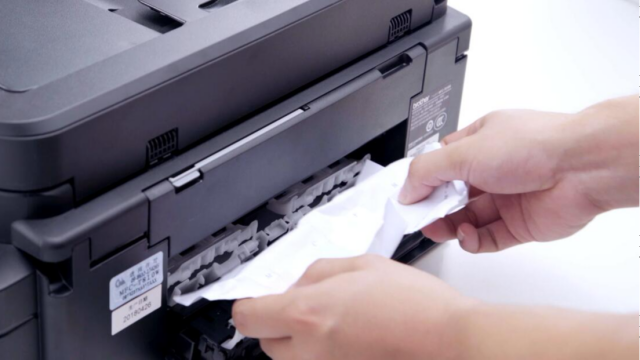
Even though the staff handbook "in writing" encouraged employees to help one another and to improve the enterprise's operational efficiency, I came to believe that quite a few mainland staff held an "it's none of my business" attitude, and that the "bystander effect" was a fairly widespread phenomenon. To give an example, I was once transferred to work in the logistics department for a month, and although the department had five photocopiers, every time a machine broke down (most commonly a "paper jam"), whoever was using it would simply walk off, without notifying the maintenance department to send someone to deal with it. It often took until every single photocopier in the department had broken down — with the department on the brink of grinding to a halt — before anyone would take the initiative to contact the relevant department to follow up. At first I found this utterly baffling, and thought to myself: surely this is just shooting themselves in the foot? Later I finally came to realise that it wasn't actually their fault. On one occasion, the computer at my office desk couldn't access the internet, and just as I was phoning the IT department to ask them to send someone, their reply was that I should fill in an online application form on the company's intranet system. Yet just as I was submitting the online application form, the system informed me that it held no staff records for me (or perhaps I was still within my probation period at the time). All right then — when I phoned the IT department again to ask, they told me I first had to download a messaging app called "WeChat Work" on my phone, and then use that app to contact the IT department to apply. And the result? After filling in my personal details, my "WeChat Work" account had to wait to be verified and approved, and that wait went on right up until the day I left the company, without ever being resolved…

At one Tuesday morning meeting, I learned from the operations director-general (my boss's boss) that the "United Front Work Department of the CPC Central Committee" in Dongguan City (the "United Front Department" for short) wished to register some "basic" personal details of the company's Hong Kong staff, to be used for "liaison and statistical purposes" — details that included Hong Kong ID-card numbers, Hong Kong phone numbers and home addresses. At the time, the director-general said this was "voluntary in nature", so before the "official deadline (Friday)" I submitted nothing at all (via Excel). As it happened, on that very day I received my dismissal letter, on the grounds that my performance during the probation period had been unsatisfactory. (Looking back now, the fact that I could still be arranged to return to Hong Kong the following day already counts as lucky…)
Although not every reader plans to work or live on the mainland, I hope this article can help "open everyone's eyes", or — in a more practical vein — help you prepare yourself mentally for the day you find yourself working alongside mainlanders.
Perhaps it explains why "I really do love Hong Kong": even though my colleagues would occasionally drive me into the city centre in the evenings for dinner and entertainment, every single day spent working on the mainland was painful and drawn out (especially during the pandemic, when border-control measures meant I couldn't return to Hong Kong each weekend). Because the factory sat near the Guangzhou–Shenzhen–Yanjiang Expressway (a major artery linking Guangzhou and Shenzhen Bay), every day I wondered: was it this expressway that was long, or were the days separating me from going home the ones that dragged on? My way of "dispelling" my homesickness at the time was to read in my dormitory every evening after work and on holidays — much like the scene the Northern Song poet Zhou Bangyan wrote of in "Qi Tian Le · The faded green wild rice leaves, exhausted, on the road to the city": "The faded green wild rice leaves, exhausted, on the road to the city; this strange land, once again, meets the autumn dusk. Evening rain breeds the cold; chirping crickets seem to urge the weaving." And I could only manage to "still have a silk pouch, catching fireflies, reading my scrolls by their light through the clear night". Even though "now the jade liquor is freshly strained, the crabs first recommended", there was nothing for it but "drunk, I topple before the mountain elder — yet my sorrow leans toward the slanting twilight".


What is certain, though, is that (one) had I still been working at my old company, I would not have been able to publish this article up to this very moment, and (two) having lived through this experience of working on the mainland, I now have a far clearer sense of how I want to walk my own road in the days ahead. Over the period to come, I'll be writing a series of articles on workplace psychology for you all — I do hope you'll keep your eyes peeled!






Comments
No comments yet — share your thoughts.