

This is not a film review
There is a Teochew saying: "A child raised by an unwell mother gives her double the comfort." The "illness" in "unwell mother" need not mean a physical ailment — it can take in illness of the mind as well.
In what follows, we want to use the popular film "Joker" to explore how an unwell mother can shape a child's growth — and indeed a whole life.

(What follows contains substantial spoilers; please decide for yourself whether to read on.)
A few unexpected twists in the film
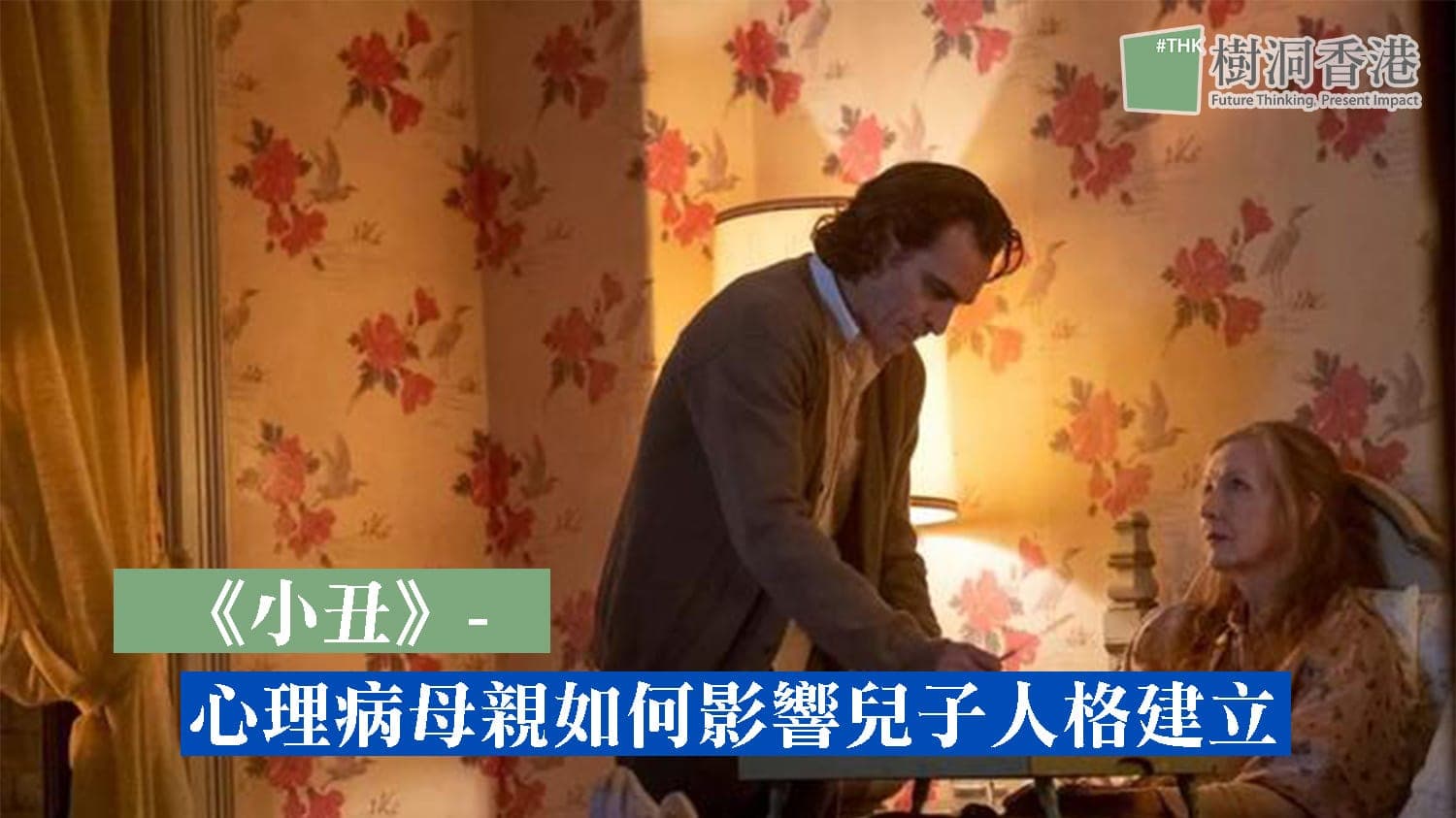
Midway through "Joker", the protagonist Arthur (hereafter "Joker") discovers that his mother, Penny, believes she once had a relationship with Thomas Wayne, the father of Batman. And so, come rain or shine, she writes to Thomas every day, convinced that he will come to their aid.
It turns out that the down-and-out Joker is supposedly the illegitimate son of the billionaire and mayoral candidate Thomas — in other words, the elder brother of his arch-nemesis, Batman. The melodrama of it could go toe to toe with the father-and-son tangle of Fang Sun-hsin and Ting-yeh in "The War of the Century".
Later, both Thomas and the butler Alfred insist the whole thing is the mother's delusion. This kind of delusion is a common type known as "erotomania" — sufferers are convinced that some person, usually a celebrity of social standing, is their lover, even though the two may never have had any contact at all [1].
Erotomania — the firm belief that some person, usually a celebrity of social standing, is one's lover, even though the two may never have had any contact at all.
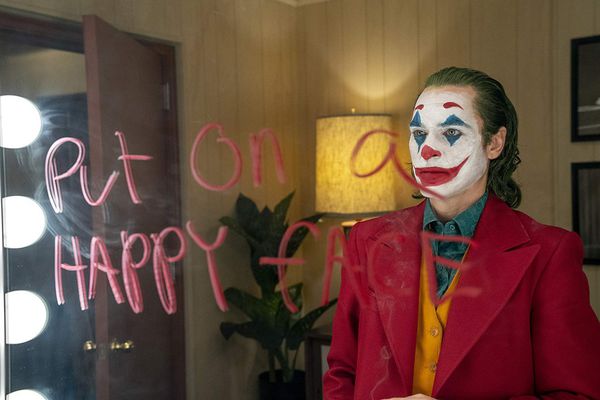
At first we assume Thomas's claim of delusion is just a pretext — an excuse to protect his wealthy image and shirk responsibility. Who would have thought his mother, Penny, really did suffer from a delusional disorder! Joker's pathological-laughter syndrome [2] may likewise have stemmed from being beaten and abused as a child. The plot really is utterly unexpected, and Joker's sense of being blindsided — the pain and helplessness of having nothing left — comes through powerfully.
How Joker's mother shaped his life
From all this it is clear that the person who shaped Joker's life most was his "mother", Penny. From the very start of the film we learn that Joker's dream is to become a beloved stand-up comedian like his idol, Murray Franklin. He dislikes his present work as a clown, yet has no choice but to keep at it in order to care for his unwell mother and to pay for her costly medicine and their living expenses.
Without Penny, his "unwell mother", he would of course still have to support himself, but at least he could have taken on some lighter work. He could, for instance, have freed himself from the shackles of his job and gone around the bars to take part in stand-up open mics and watch comedy performances.
Joker was also starved of love over the long term. Day after day he returned home from gruelling work, yet his mother never cared whether things had gone badly for him at work or whether he had run into anything hard to bear. Penny lavished all her love and attention on Thomas instead.
Penny's neglect was a kind of harm. Her "positive thinking" was sharper still, like a blade. Joker would often repeat these two lines:
“She told me I had a purpose to bring laughter and joy to the world”
“My mother always tells me to smile and put on a happy face”
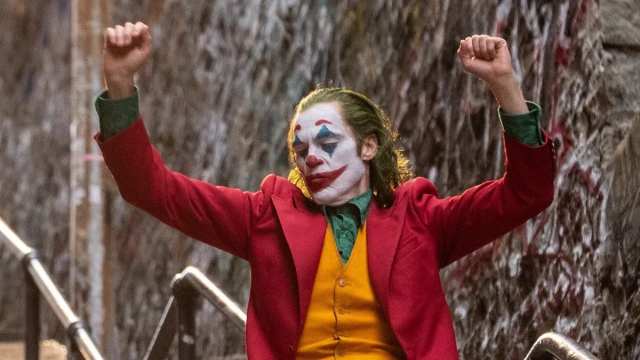
An unwell mother becomes the chains within Joker
It is precisely because of this that, no matter how much misfortune Joker meets, he instinctively tucks his inner grief away. A friend who is a psychologist once said:
To truly treat a "problem child" with psychological or emotional difficulties, the most important thing is to "treat" the parents.
This may be no grand theory from some famous authority, but it is not without reason. Parents — and mothers in particular — are often the people who shape a person most deeply. The German psychologist Bert Hellinger believed, too:
Your relationship with your mother determines your relationship with the world. [3]
Penny is like the chains within Joker. For Joker to set himself free, doing away with Penny is all but inevitable.
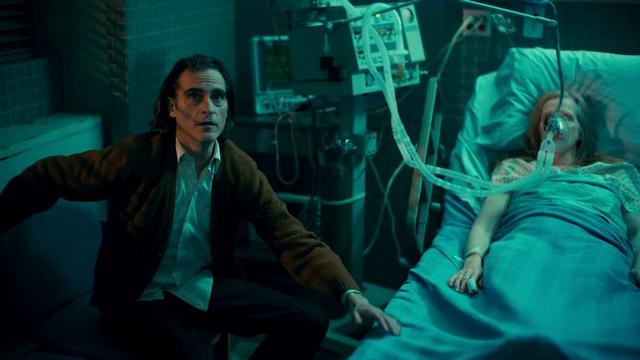
Did Penny really have a delusional disorder?
Having discussed how a mother shapes the building of a child's personality, we may as well dig into one of the film's hidden clues.
Some viewers online have put forward an intriguing reading: that Arthur really is Thomas Wayne's biological son. After Penny is killed, Arthur finds a photograph of his mother in her youth, with the words "Love your smile – TW" written on the back. "TW" looks very much like Thomas Wayne's signature. If the psychiatric hospital's report is true, why include this detail at all? Is it a hint to the audience, or merely a deliberate red herring?
Some say it is there to explain how Penny formed her delusion that Thomas was in love with her. But as mentioned earlier, a delusion can form without any actual contact — it can rest entirely on a thought. So this contact would not have been necessary. And given Thomas's wealth and power, fabricating a medical report would hardly have been difficult [4].
References:
- 1. Kennedy, N., McDonough, M., Kelly, B., & Berrios, G. E. (2002). Erotomania revisited: Clinical course and treatment. Comprehensive Psychiatry, 43(1), 1-6.
- 2. What illness does the Joker actually have? The secret hidden behind his uncontrollable laughter https://www.cw.com.tw/article/article.action?id=5097233
- 3. "Why did Arthur in 'Joker' kill his own mother?" Many people don't understand — from the very start, this one line from his mother sealed the ending! – Writing Diaries with Filmhttps://inmywordz.com/archives/45111
- 4. A scene-by-scene reading of "Joker": what is real and what is falsehttps://movie.douban.com/review/10553755/






Comments
No comments yet — share your thoughts.